By Samanta Echevarría
As for terror and horror literature, I have always felt identified with Joey Tribbiani in that famous thirteenth episode of season three of the television series Friends, in which Joey (Matt LeBlanc) and Rachel (Jennifer Aniston) exchange their favorite books. In the episode, Joey must read Little Women by Louisa May Alcott, and Rachel, in turn, must read The Shining by Stephen King. What is funny, and what makes the episode memorable, is Joey’s reaction to King’s book: although it is his favorite, the terrifying nature of the story is such that he keeps it stored in the most remote place of his small New York apartment—inside the kitchen freezer—so that the plot can literally “cool down.”
I read Rachel Green’s favorite book, Little Women, when I was eleven or twelve. I enjoyed it, laughed, and experienced that classic firsthand, and of course I also cried, memorably, like “Mary Magdalene,” just as Joey does in the Friends episode when he discovers that (spoiler) one of the March sisters dies. In contrast, I did not watch the 1980 film The Shining, based on Stephen King’s novel and starring Jack Nicholson, until adulthood, and only because my husband insisted that I should watch this psychological suspense classic. I must confess that I closed my eyes in several scenes, and others, I still cannot get out of my mind.
So, I have personally never read Stephen King, simply because I know I would react just as Joey Tribbiani does—my copy would probably end up in the freezer. I admit I am too “cowardly” to read King, and that I do not have the stomach for it, even though I recognize his status as the absolute “King” (as his last name suggests) of horror literature and the importance of his many works, now classics of American fiction.
Despite being a scaredy-cat, I do enjoy police suspense, murder mystery, and Gothic literature. As I did with Alcott’s novel in my adolescence, I devoured the stories of the world’s most famous detectives: in English class, the short stories of Sir Arthur Conan Doyle and his detective Sherlock Holmes, which I read without being able to stop; later, the most famous volumes of Agatha Christie and her detective Hercule Poirot, such as Murder on the Orient Express and Death on the Nile, which continue to captivate me to this day and which I have reread many times; as well as my favorite detective of all, the beloved Tintin, protagonist of the graphic stories by Belgian author Hergé—my daughters’ favorite too.
Gothic literature, for its part, is a genre that combines elements of horror, mystery, and the supernatural, with intense emotions such as fear and anguish. It emerged in England at the end of the eighteenth century as a response to sentimental Romanticism and is characterized by gloomy settings, plots centered on revenge, death, and family secrets, and the intrusion of the past into the present. Some of the most famous examples include The Castle of Otranto by Horace Walpole, Dracula by Bram Stoker, Frankenstein by Mary Shelley, Wuthering Heights by Emily Brontë, The Picture of Dorian Gray by Oscar Wilde, as well as several stories by Edgar Allan Poe.
In Mexican literature, the fascination with death and its mysteries—one of the defining features of Mexican identity—has been portrayed with black humor, blurred boundaries between reality and fiction, and touches of magical realism. This makes it difficult for the reader to distinguish between the real and the imagined. Such is the case of Pedro Páramo by Juan Rulfo, or one of my favorite books, Aura by Carlos Fuentes. And I want to emphasize that both books are, in my opinion, absolutely for adult readers, given the controversies the latter has faced in Mexico and its episodes of school censorship. Aura is narrated unusually in the second person and describes the haunting experience of a young student who becomes a French translator in an old house on Donceles Street in Mexico City in the 1960s, where he undergoes a supernatural encounter. This psychological horror novella—mixing fantasy, reality, and the Gothic—is a jewel of Mexican literature.
Other Mexican authors who have excelled in suspense and horror include Amparo Dávila, known as a master of the genre; Francisco Tario, a classic of the fantastic tale; Bernardo Esquinca, considered one of the leading contemporary authors of horror and crime fiction; and Antonio Malpica, who mixes horror and adventure in works such as Isla de Apocalipsis. Other notable figures include Adela Fernanda, Emiliano González, and Atenea Cruz.
Latin American horror, more broadly, has often focused on fears rooted in social and political violence—disappearances, coups, inequality. Authors such as Horacio Quiroga, Mariana Enríquez, Samanta Schweblin (my namesake), and Leopoldo Lugones explore terrors that reflect historical and contemporary traumas.
As for Mexican Gothic literature written by women, the genre continues to generate interest with new voices. Recently, I watched an interview on social media by host Pepe Cantellano in his program Noches de Lectura, where he spoke with Mexican horror author Sandra Becerril about her new novel El Carnaval del Diablo. Her explanations about her narrative process intrigued me.
Some years ago, our book club read Mexican Gothic (Penguin, 2020) by Mexican-Canadian author Silvia Moreno-García. I read the English version and found it spectacular—controversies aside—because it combines Gothic tradition with Mexican literature in a powerful way. I loved the cultural references. Set in 1950s Hidalgo, the novel follows a socialite who must rescue her cousin from a remote country mansion inhabited by a peculiar British family. The Spanish translation, however, disappointed me—not because of the story itself, but because it was translated into Peninsular Spanish and not Mexican Spanish. Since the story is set in Pachuca, the “Castilian” expressions felt out of place. A great book with an unfortunate translation choice. Another book in this genre that has been discussed in the United States is The Hacienda by Isabel Cañas, though I have not yet had the chance to read it.
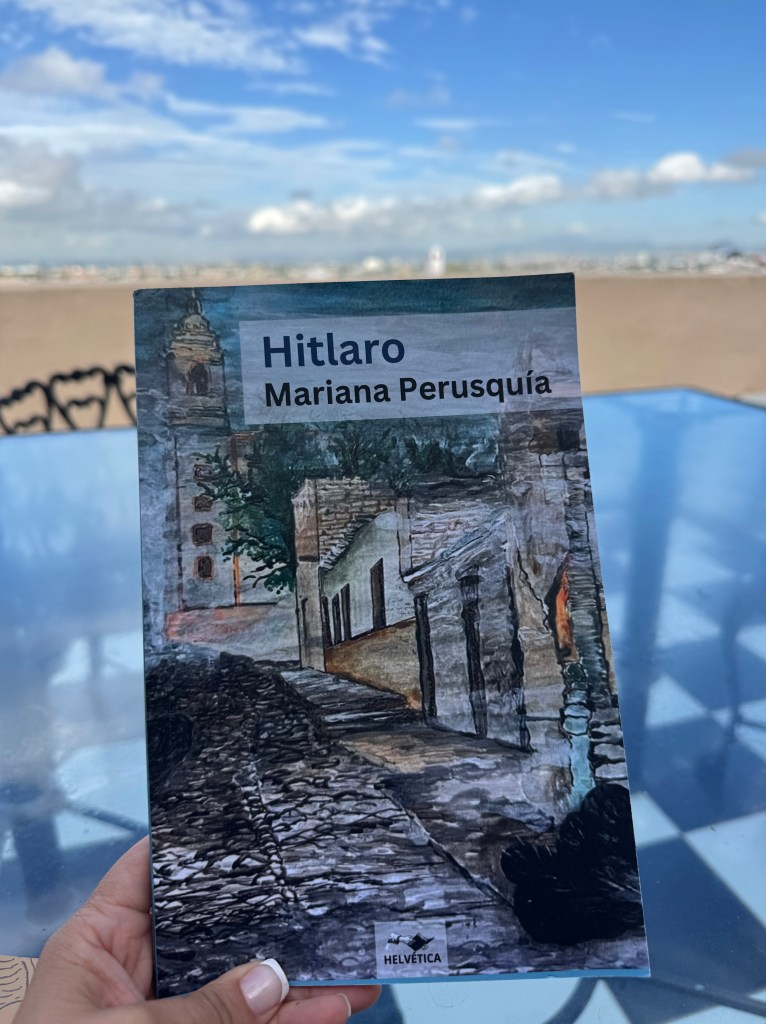
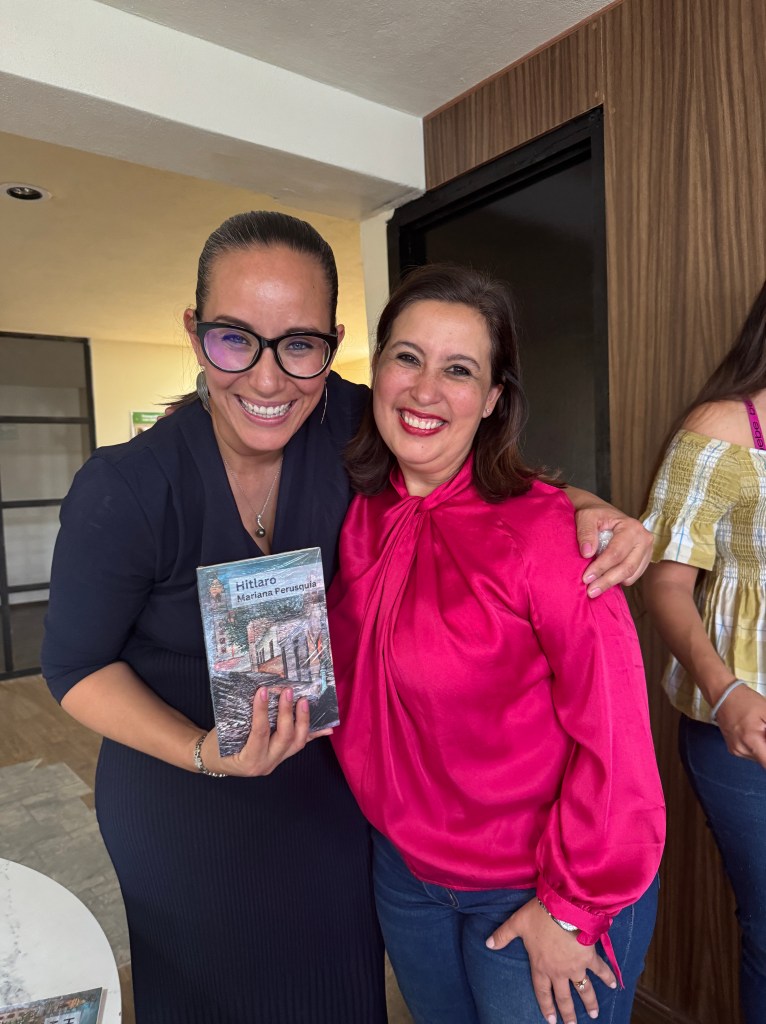
However, without a doubt, one of the promising new voices in this Mexican Gothic revival is Mariana Perusquía from Querétaro, with her literary debut Hitlaro (Helvética, 2025).
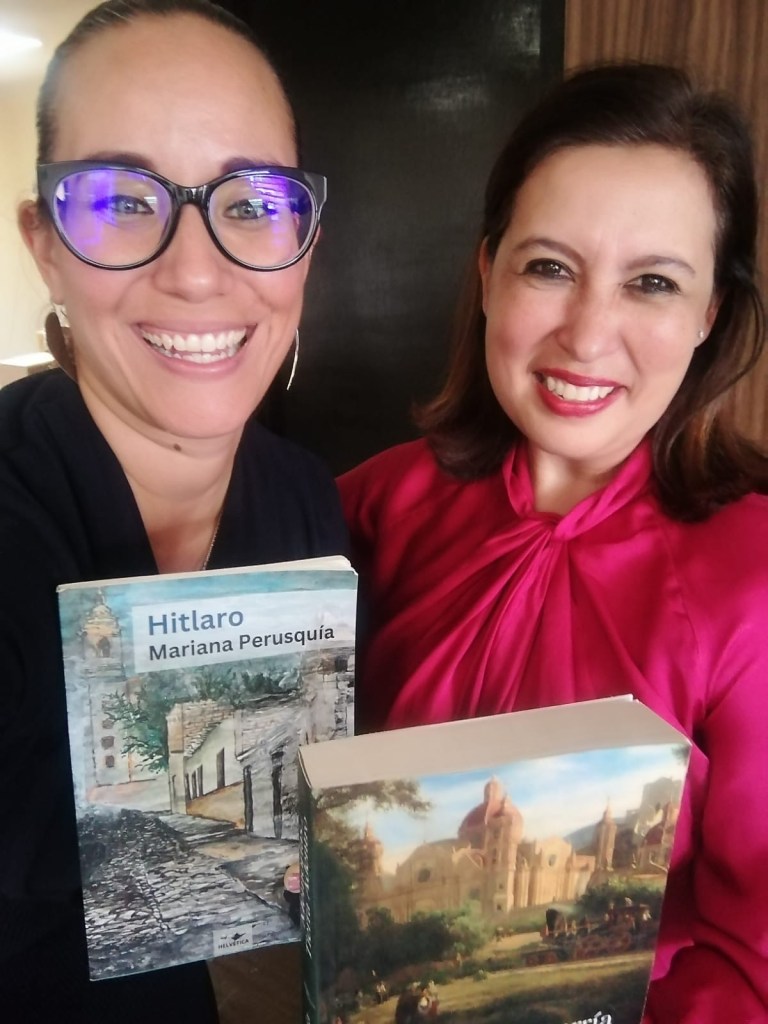
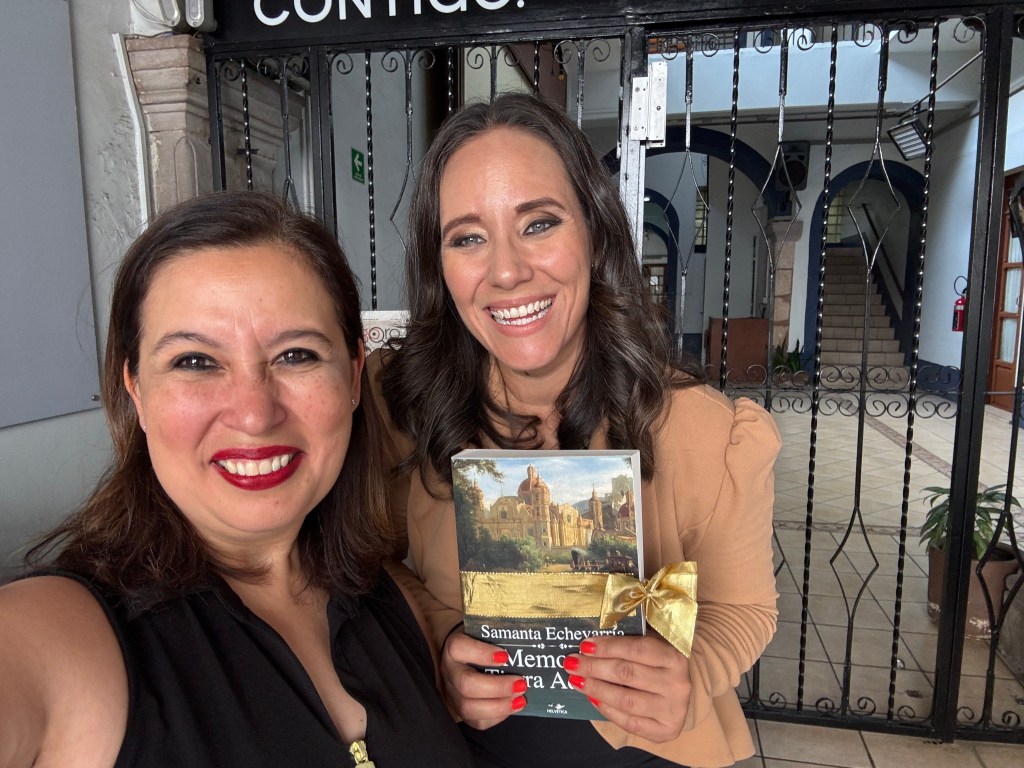
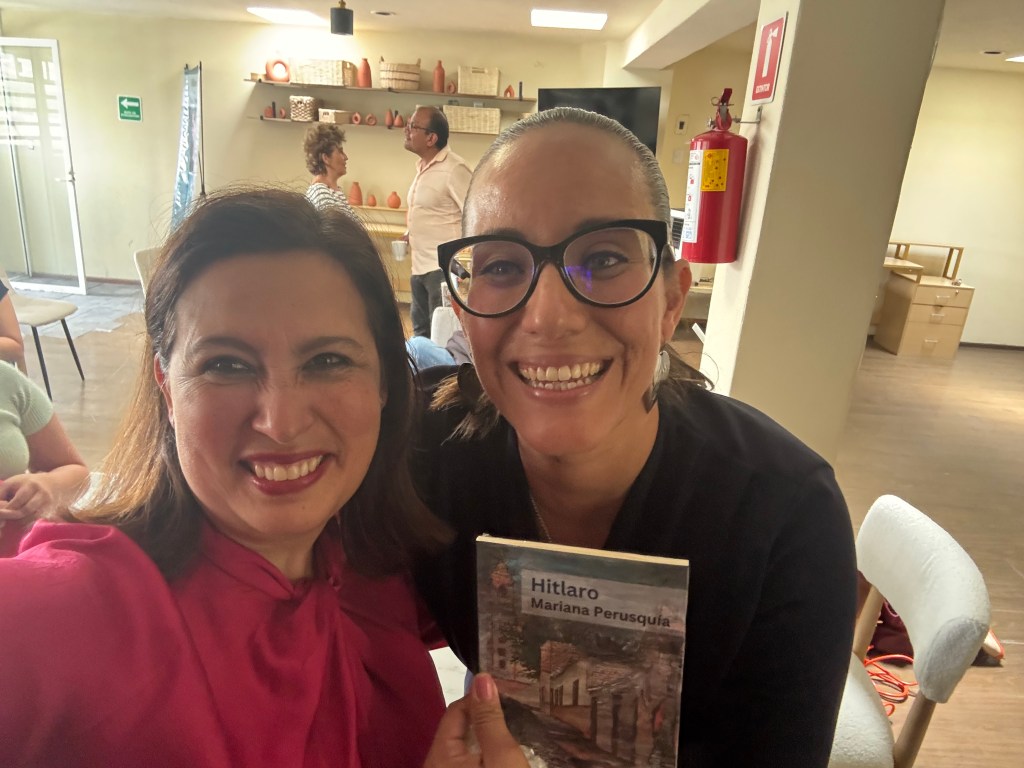
I had the opportunity to meet Mariana this summer, and it was a pleasant experience. Mariana is not only an excellent journalist, but an even better human being. We connected on social media and exchanged messages about her work as a communicator. We later met in person in Querétaro when she interviewed me for her radio program for the release of my own novel, and she was about to present hers. A novel she had written during her university years and kept for twenty years was finally coming to light. A few days after my interview aired on La Hora Nacional, I attended one of her readings. I finished her novel in just two days.
Hitlaro is an excellent short novel, with a narrative that moves between the supernatural and the phantasmagorical. It is a blend of Aura, Pedro Páramo, and Mexican Gothic. In her literary debut, Perusquía sets the novel in the fictional town of Hitlaro, weaving a story that fuses Gothic elements with magical realism, immersing the reader in a journey between life, death, and memory. The book explores themes such as guilt, redemption, and the legacy of women who dare to defy fate. It is impeccably crafted, with a strong plot and rhythm. It hooked me from beginning to end. I was left wanting more.
Mariana Perusquía holds a degree in Communication and Journalism and a master’s degree in Contemporary Literature. A well-regarded journalist in Querétaro, she is a producer and host at Radio y Televisión Querétaro (RTQ), where she leads the morning newscast. Recognized for her work, she received the 2023 State Journalism Award. Her experience and professionalism position her as an influential voice in Querétaro’s media landscape.
Her novel Hitlaro is available on Amazon.
Hitlaro *****.


Deja una respuesta